Muhammad: Strategic Typography for High-Impact Visual Communication
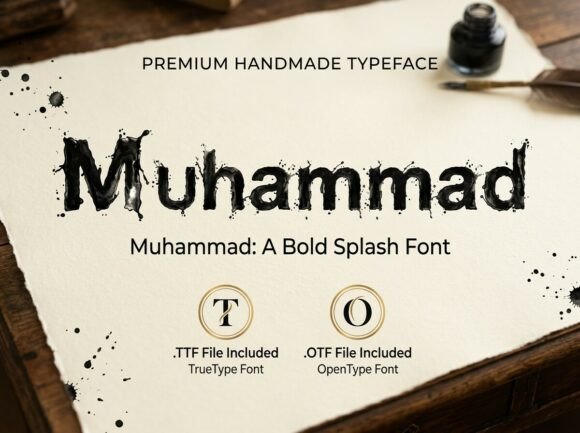
In the crowded landscape of digital and print design, typography is rarely just about legibility; it is a primary vehicle for brand positioning and emotional resonance. Muhammad is a decorative display font engineered specifically to serve as a focal point rather than a background element. For entrepreneurs, marketers, and creative professionals, understanding the strategic application of this typeface is essential. It is not a utility font for body copy or technical documentation. Instead, Muhammad functions as a visual anchor, designed to arrest attention and convey a strong artistic personality instantly.
Selecting Muhammad for a project is a deliberate decision to prioritize impact over neutrality. Its intricate details and unique letterforms communicate creativity, boldness, and a departure from conventional corporate aesthetics. However, possessing a powerful tool requires the discipline to use it correctly. This guide explores how to leverage Muhammad effectively across branding, marketing, and product design while avoiding common pitfalls associated with high-contrast decorative typography.
Defining the Strategic Role of Decorative Display Fonts
To use Muhammad effectively, one must first understand its place in the typographic hierarchy. In professional design strategy, fonts are categorized by function. Serifs and sans-serifs often handle information delivery, ensuring readability at small sizes. Display fonts like Muhammad handle persuasion and identification.
Muhammad is best understood as a "headline-first" asset. Its value proposition lies in its ability to transform standard text into a graphical element. When planning a campaign or brand identity, consider Muhammad as you would a logo mark or a hero image. It carries significant visual weight. Therefore, it should be deployed where the primary goal is to stop the scroll, create shelf presence, or establish an immediate mood. Using it for secondary information dilutes its power and compromises user experience. The strategic advantage of Muhammad emerges only when it is given sufficient negative space and contrast to perform its specific function: creating an instant wow factor.
Aligning Typography with Brand Positioning
Typography signals brand values before a single word is read. Muhammad’s artistic flair and intricate construction suggest a brand that is confident, creative, and unafraid of distinction. This makes it particularly valuable for businesses positioning themselves against sterile, minimalist competitors.
- Creative Agencies and Freelancers: Use Muhammad to signal artistic capability and bespoke service. It tells potential clients that your work will be custom-crafted rather than templated.
- Lifestyle and Fashion Brands: The font’s decorative nature aligns well with apparel and merchandise. It transforms a simple T-shirt or tote bag into a statement piece, increasing perceived value.
- Event and Entertainment Promoters: For music festivals, album covers, or gallery openings, Muhammad provides the necessary energy and cultural relevance that standard grotesques cannot achieve.
- Artisanal Product Makers: Packaging design benefits from the font's handcrafted aesthetic, suggesting premium quality and attention to detail on the shelf.
If your brand strategy relies on trust through uniformity, tradition, or technical precision, Muhammad may be misaligned. However, if your goal is differentiation, emotional connection, or visual disruption, this typeface supports those objectives directly.
Practical Applications Across Media Channels
Versatility is a key requirement for modern design assets. Muhammad bridges the gap between digital and physical touchpoints, maintaining its integrity across various formats. Understanding where it performs best allows for more efficient resource allocation during production.
Digital Presence and Social Engagement
Social media feeds are saturated with content. Static posts often fail because they blend into the background noise. Muhammad serves as a pattern interrupt. When designing quote cards, announcement graphics, or YouTube thumbnails, the font’s unique silhouette ensures recognizability even at thumbnail size. For marketers, this translates to higher click-through rates and better brand recall. The key is restraint; let the font be the hero. Pair it with solid colors or simple photography to prevent visual clutter that reduces engagement.
Physical Merchandise and Packaging
In retail and e-commerce, packaging is the final stage of the sales funnel. Muhammad adds a layer of sophistication to unboxing experiences and product labels. Because the font features intricate details, it reproduces beautifully on textured papers and specialty prints. For apparel designers, the letterforms are distinct enough to stand alone without additional illustration, reducing production complexity while maximizing aesthetic appeal. When using Muhammad for merchandise, always test print samples. Decorative fonts can sometimes lose fine details depending on the fabric weave or printing method, so verifying legibility and ink spread is a necessary operational step.
Large Format and Environmental Design
Posters, billboards, and event signage demand typefaces that remain compelling at scale. Muhammad was designed for this exact purpose. Unlike geometric sans-serifs that can feel cold when enlarged, Muhammad retains its character and warmth. This makes it ideal for wayfinding in creative spaces or headline treatment for exhibition banners. The font’s strong visual personality ensures that environmental graphics contribute to the overall atmosphere rather than merely serving a utilitarian function.
Technical Integration and Workflow Compatibility
A beautiful font is useless if it disrupts your workflow. Muhammad is engineered for broad compatibility, supporting both professional and accessible design ecosystems. This flexibility is crucial for teams with mixed skill levels or varying software licenses.
For professional designers, Muhammad integrates seamlessly with industry-standard tools including Adobe Illustrator, Photoshop, and InDesign. These platforms allow for advanced typographic manipulation, such as kerning adjustments and OpenType feature access, which are often necessary to get the most out of decorative letterforms. For entrepreneurs, educators, and social media managers who rely on Canva or similar beginner-friendly tools, the font remains fully functional. This cross-platform reliability ensures that brand consistency can be maintained whether a design is being finalized by a senior art director or created quickly by a marketing coordinator.
Both PC and Mac users will find installation straightforward. However, file management is part of the strategy. Ensure all team members have the correct license and version installed to prevent missing font errors during collaborative projects. Centralizing font assets in a shared cloud library prevents version conflicts and maintains operational efficiency.
Risk Mitigation: Avoiding Common Decorative Font Pitfalls
While Muhammad offers significant advantages, misuse can undermine design effectiveness. Decorative fonts carry inherent risks that require thoughtful mitigation.
- The Readability Trap: Never use Muhammad for body text, captions, or long-form content. Its intricate details reduce reading speed and cause eye fatigue at small sizes. Reserve it strictly for headlines, logos, and short phrases (3–5 words maximum).
- Visual Competition: Avoid pairing Muhammad with other ornate typefaces or busy illustrations. Doing so creates visual chaos. Balance is achieved through contrast. Pair Muhammad with a clean, neutral sans-serif or a simple serif for supporting text. The supporting type should recede, allowing Muhammad to dominate.
- Contextual Dissonance: Consider the audience and message carefully. A highly decorative font may be inappropriate for sensitive topics, legal disclaimers, or conservative industries. Always evaluate whether the font’s tone matches the content’s intent.
- Overuse Within a Single Layout: Using Muhammad multiple times on one poster or webpage diminishes its impact. Treat it as a singular accent. If everything screams for attention, nothing gets heard.
By establishing clear usage guidelines within your brand style guide, you can empower team members to use Muhammad confidently without risking brand coherence or user experience.
Making Intentional Design Decisions
Ultimately, the decision to use Muhammad should be rooted in project goals rather than personal preference. Before selecting this typeface, ask three strategic questions:
- What is the primary action we want the viewer to take? If the answer involves noticing, feeling, or remembering, Muhammad is likely appropriate. If the answer involves reading, scanning, or comparing data, look elsewhere.
- Does this font reinforce our desired brand perception? Verify that the artistic style aligns with current brand attributes and future positioning goals.
- Is the environment suitable for decorative type? Consider viewing distance, screen size, and reproduction quality. A font that looks stunning on a 27-inch monitor may fail on a mobile notification banner.
Muhammad is more than a collection of glyphs; it is a strategic asset for creators who understand the power of visual language. By approaching its use with intention, respecting its limitations, and leveraging its strengths in appropriate contexts, professionals can elevate their work from ordinary to extraordinary. Whether building a new brand identity, launching a product line, or refreshing social media content, Muhammad provides the distinctive voice needed to cut through the noise and leave a lasting impression. Success lies not just in having access to beautiful tools, but in knowing precisely when and how to wield them for maximum effect.