Ghost Rebellion: Merging Vintage Horror Aesthetics with Modern Rebellious Typography
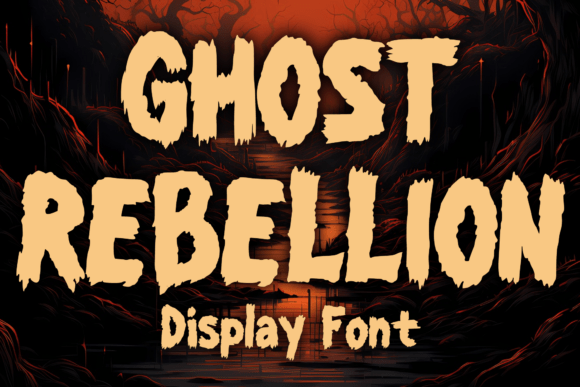
In the vast landscape of graphic design, typography serves as the primary vehicle for emotional communication. While clean sans-serifs and traditional serifs dominate corporate and editorial spaces, there exists a specialized niche where legibility must share the stage with atmosphere. Ghost Rebellion occupies this unique intersection, offering a typeface that transcends mere lettering to become a visual narrative device. Drawing audacious inspirations from vintage horror movies, chilling horror comics, and the rebellious spirit of Metal music, this font is not simply a collection of glyphs; it is a curated aesthetic experience designed for creators who need to evoke specific, visceral reactions.
Understanding the utility of Ghost Rebellion requires looking beyond its surface-level "spooky" appearance. For professionals, educators, and hobbyists alike, the value lies in its ability to bridge historical design references with contemporary application. It breathes life into the ghastly and the eerie by synthesizing three distinct cultural pillars: the grainy tension of mid-century cinema, the exaggerated ink traps of pulp comics, and the aggressive, unpolished energy of heavy metal album art. This synthesis creates a versatile tool for anyone tasked with communicating themes of darkness, rebellion, or nostalgia.
The Anatomy of Audacious Inspiration
To effectively utilize Ghost Rebellion, one must first understand the design lineage that informs its structure. The typeface does not exist in a vacuum; it is a direct response to specific artistic movements that have defined horror and counter-culture visuals for decades.
Vintage Horror Cinema and Textural Decay
The influence of vintage horror movies is evident in the textural quality of the font. Unlike modern digital fonts that often strive for mathematical perfection, Ghost Rebellion embraces imperfection. The edges of the letterforms suggest the degradation of film stock or the wear of old movie posters. This intentional distress signals to the viewer that the content is rooted in history and tradition. For designers working on projects that require an authentic retro-horror feel, this built-in texture eliminates the need for extensive post-processing or overlay effects. The font carries the atmosphere within its vectors, allowing for cleaner workflows and more scalable results.
Horror Comics and Exaggerated Forms
Chilling horror comics of the past relied on bold, expressive lettering to convey screams, whispers, and supernatural events. Ghost Rebellion adopts this dramatic approach through high-contrast strokes and unconventional proportions. The characters possess a kinetic energy, appearing as though they are vibrating or melting. This characteristic is particularly useful for hierarchy management in layout design. When every letter treads between the dark and the daring, the typeface naturally commands attention, making it ideal for headlines, titles, and focal points where standard display fonts might feel too sterile or safe.
Metal Music and the Spirit of Defiance
Perhaps the most distinct influence is the rebellious spirit of Metal music. This genre has always prioritized raw emotion over technical polish, and Ghost Rebellion reflects this ethos. The sharp angles and aggressive terminals speak to a counter-cultural identity. This makes the font applicable beyond traditional horror contexts; it is equally at home in designs related to alternative fashion, underground music promotion, and edgy streetwear. The "rebellion" in the name is functional, signaling to audiences that the brand or project operates outside mainstream conventions.
Practical Applications Across Creative Disciplines
The versatility of Ghost Rebellion becomes apparent when examining its performance across different media. While it is undeniably a perfect companion for haunting and Halloween-themed creative endeavors, its utility extends to year-round commercial and artistic projects.
Apparel and Merchandise Design
Designing spine-chilling merchandise such as t-shirts and apparel presents unique technical challenges. Fabric absorbs ink, and intricate details can be lost during the screen printing or direct-to-garment process. Ghost Rebellion is engineered with these physical constraints in mind. The bold weight and deliberate spacing ensure that the terrifying twist remains intact even after washing and wear. For business owners in the print-on-demand space, this reliability reduces waste and customer returns caused by illegible prints. Furthermore, the font’s strong silhouette allows for effective design at both large chest-print scales and smaller sleeve or tag placements.
Editorial and Book Cover Art
Crafting a frighteningly good book cover requires typography that hints at the narrative within without revealing too much. In the publishing industry, genre signaling is crucial for sales. Ghost Rebellion acts as an immediate visual cue for readers browsing horror, thriller, or dark fantasy categories. Its distinctive style helps titles stand out in thumbnail views on digital marketplaces while maintaining integrity in physical bookstore displays. Designers can pair this display font with cleaner body text to create a balanced composition that feels professional yet unsettling. The font provides the necessary emotional hook, drawing the reader into the story before they even read the synopsis.
Event Branding and Environmental Graphics
Adding a terrifying twist to Halloween party décor or haunted attraction branding requires scalability. Ghost Rebellion performs exceptionally well in environmental design, from small signage to massive banners. The font’s inherent character allows it to function as a standalone graphic element. When used on posters and banners, the letters themselves become part of the set design, reducing the need for additional illustrative assets. For event organizers and educators creating immersive experiences, this efficiency is invaluable. The typeface sets the tone instantly, transforming generic spaces into themed environments through typography alone.
Ephemera and Collectibles
Conceptualizing wicked greeting cards, stickers, and collectibles demands a balance of novelty and readability. These items are often kept as mementos, meaning the design must withstand repeated viewing. Ghost Rebellion offers enough intricacy to reward close inspection while remaining legible enough to communicate messages clearly. In the sticker market, where die-cut shapes are popular, the font’s organic, irregular edges lend themselves naturally to custom contouring. This adaptability makes it a staple for artists selling at conventions or through online marketplaces, where unique, tangible goods drive engagement.
Technical Considerations and Best Practices
While Ghost Rebellion is a powerful asset, maximizing its potential requires adherence to certain typographic principles. Understanding what this font is—and what it is not—is essential for professional execution.
- Hierarchy Management: Due to its high level of detail and strong personality, Ghost Rebellion should primarily be used for display purposes. Using it for extended body copy will result in fatigue and reduced comprehension. Pair it with neutral sans-serifs or monospaced fonts to provide visual breathing room and contrast.
- Color Theory Integration: The font’s texture interacts dynamically with color. High-contrast combinations (e.g., white on black, blood red on cream) amplify the horror aesthetic. Conversely, muted or desaturated palettes can lean into the vintage/nostalgic aspect. Avoid using complex gradients directly on the text unless testing confirms legibility is maintained, as the internal texture can clash with gradient transitions.
- Spacing and Kerning: Display fonts often require manual kerning adjustments to achieve optical balance. Because Ghost Rebellion features irregular forms, automated tracking may create awkward gaps or collisions. Take the time to adjust spacing manually, especially for logos or short headlines, to ensure the "rebellious" look appears intentional rather than accidental.
- Contextual Appropriateness: Always consider the target audience. While the font is excellent for mature or niche markets, its intense aesthetic may be unsuitable for general family audiences or corporate communications unrelated to entertainment. Evaluate the brand voice carefully before implementation.
The Psychological Impact of Thematic Typography
Beyond aesthetics and technical specs, Ghost Rebellion leverages psychological associations to enhance user experience. Typography is never neutral; it primes the brain for specific types of information processing. When a viewer encounters this typeface, their brain activates schemas related to fear, excitement, nostalgia, and non-conformity. This priming effect increases the efficacy of the accompanying message.
For marketers and content creators, this means higher engagement rates for targeted campaigns. A poster using Ghost Rebellion doesn't just say "Halloween Party"; it visually simulates the feeling of attending one. This sensory alignment between form and content is what separates amateur design from professional communication. The font acts as a shorthand, conveying complex mood indicators that would otherwise require paragraphs of descriptive text or expensive photography.
Furthermore, in an era of AI-generated imagery and generic stock assets, handcrafted or stylistically distinct typography like Ghost Rebellion offers a marker of human intentionality. It signals that a creator made specific choices to evoke a specific feeling. For researchers studying visual culture or educators teaching design history, the font serves as a contemporary case study in how historical genres are remixed for modern consumption. It demonstrates that "horror" is not a static aesthetic but a living language that evolves with each new generation of designers.
Integrating Ghost Rebellion into Creative Workflows
Adopting a specialized typeface requires adjusting standard workflows. Whether you are a solo hobbyist or part of a large agency, integration should be strategic.
- Audit Existing Assets: Before applying Ghost Rebellion, review current brand guidelines or project mood boards. Identify where the current visual language lacks emotional impact or fails to connect with the intended subculture.
- Prototype in Context: Never judge the font in isolation. Test it immediately within the actual layout, on the actual substrate (if printing), or at the final screen resolution. What looks striking in a 72pt preview may fail at 1200px wide on a mobile banner.
- Establish Usage Rules: If using the font for a brand or recurring series, document specific usage rules. Define minimum sizes, approved color pairings, and forbidden combinations. This ensures consistency and prevents the font from being misused in ways that dilute its impact.
- Gather Audience Feedback: Because thematic typography elicits strong reactions, A/B testing or focus groups can be valuable. Verify that the "terrifyingly delightful touch" lands as intended and does not inadvertently alienate key stakeholders.
Ultimately, Ghost Rebellion represents more than just a stylistic choice; it is a functional tool for storytelling. By anchoring itself in the rich traditions of vintage horror and metal culture while addressing modern production needs, it empowers creators to produce work that is both aesthetically compelling and commercially viable. Whether injecting a horrifyingly delightful touch to seasonal merchandise or establishing a lasting identity for an alternative brand, this typeface proves that even in the digital age, there is profound power in letters that dare to embrace the dark.